If you’ve ever stood in a bike shop or pulled up next to another road bike in a group ride, you’ve probably wondered why two bikes with similar components, same tire size, and matching crankset lengths can feel totally different under you. As someone who’s spent the last 12 years designing and sourcing road bike frames for a small supply business—working with professional teams and weekend riders alike— I can tell you the difference almost always traces back to the frame, not the parts bolted to it. Speed in road cycling isn’t just about horsepower or carbon wheels; it’s about how the frame manages power, cuts through wind, and keeps you moving efficiently without wasting energy. Let’s break down how that works, because it’s not just about weight (though weight plays a part) — it’s about a dozen smaller, often overlooked factors that add up to seconds per kilometer, which make all the difference in races and long rides. Road Bike Frame

First, let’s get rid of the biggest myth: a lighter frame isn’t always a faster frame. Yeah, climbing feels better with a lighter chassis, but on flat roads or into a headwind, a frame that’s stiffer where it counts can actually move you forward more than a lighter, floppy one. Here’s why: every time you push down on a pedal, that force has to travel from the crank, through the bottom bracket, and into the rear wheel. If the frame flexes when you apply that force, a chunk of your energy disappears into bending the seat stays, chain stays, or bottom bracket shell instead of turning the wheel. I saw this firsthand a few years back when a pro team came to us with a problem: their new “ultra-light” frames were costing them time in sprints. When we tested them, the bottom bracket shell flexed 1.2 millimeters under maximum load — enough so that a rider putting 1,200 watts of power into the pedal had almost 8% of that force lost to flex. We reinforced the bottom bracket and chain stays just enough to cut that flex in half, added a tiny 100 grams to the frame, and their sprint times dropped by 0.8 seconds over 200 meters. That’s the kind of gain you can’t get from buying a $2,000 set of wheels.
Stiffness isn’t a one-size-fits-all number, though. Where you need stiffness depends on how you ride. If you’re a climber who stands on your pedals for 10 minutes at a time, you want extra stiffness in the bottom bracket and rear triangle to make every downstroke count. If you’re a time trial rider who stays seated and pushes high cadence, you want a frame that’s a little more flexible in the seat tube to absorb road vibration — that reduces fatigue so you can hold power longer. Too much stiffness in the seat tube, and you’ll feel every crack in the road, wasting energy bouncing instead of moving forward. Our design team works with hundreds of riders every year to adjust these ratios: for example, we make our endurance road bike frames with a slightly compliant seat stay bridge to smooth out the ride, while our race frames have a stiffer bridge for direct power transfer.
Next comes aerodynamics, which is probably the most talked-about factor when it comes to bike speed, and the frame is where a lot of that aerodynamic work happens. A lot of riders focus on their position on the bike — dropping bars, tucking elbows — but the frame’s shape is the foundation of that position. If the head tube is too long or too short, you can’t get into a streamlined tuck without straining your neck or feeling unstable. If the down tube is thick and round, it creates drag as air hits it at 40 km/h; a teardrop-shaped down tube, by contrast, cuts through air like a knife, reducing drag by up to 15% in wind tunnel tests. We don’t just shape tubes for looks, either; every tube’s diameter, length, and profile is tested to minimize turbulence around the wheels and fork. Last year, we redesigned our road frame’s fork crown to be smoother, which reduced air disturbance around the front wheel by 7%, and that translated to a 2-second gain over a 10-kilometer flat time trial. Even the seat tube’s angle matters: a steeper seat tube moves your rear wheel forward, which shortens the wheelbase and reduces the area of the frame exposed to crosswinds. For riders in areas with frequent side winds, that small change makes the bike easier to handle and faster to ride.
Wheelbase is another frame geometry detail that affects speed, especially in different conditions. Wheelbase is the distance between the front and rear axles; a longer wheelbase makes a bike more stable at high speeds, which is good for descending or riding in a group, but it adds a little extra drag because the frame sits wider, catching more wind. A shorter wheelbase is more agile, great for sprinting and twisting through corners, but it can feel skittish in crosswinds. We balance this based on the frame’s intended use: our race frames have a wheelbase that’s 2 centimeters shorter than our endurance models, giving riders the quick handling they need for bursts of speed without sacrificing too much stability. It’s a trade-off, but one we’ve refined over years of working with pro riders who tell us that that 2 centimeters can be the difference between holding a wheel in a fast group and getting pushed off line by a gust of wind.
Suspension? Wait, road bikes don’t have suspension, right? But the frame’s material and its connection to the wheels act like a type of compliance that affects speed. A carbon fiber frame, for example, isn’t just lighter than aluminum; it can be engineered to flex in specific areas to absorb vibration from rough roads. Aluminum frames are stiffer, which means more power transfer, but they also send more vibration up to the rider, leading to fatigue. A tired rider can’t hold as much power or as steady a pace, so over a 100-kilometer ride, a carbon frame that smooths the road can make you faster than an aluminum frame that’s slightly stiffer. We test this all the time with our in-house vibration tester: our carbon endurance frames absorb 30% more road vibration than our aluminum race frames, which translates to about 5 watts of saved energy over a long ride. That’s not a huge number per second, but over hours of riding, it adds up to being able to hold a higher pace without burning out.
One factor that’s often overlooked is frame compatibility. If your frame can’t fit wider tires, you’re limiting your speed. A lot of riders think narrow tires (23mm or 25mm) are faster, but on rough roads, wider tires (28mm or 32mm) can run lower pressure, absorb more vibration, and have lower rolling resistance. We design our frames to fit up to 34mm tires because that gives riders the flexibility to choose the right tire for the road surface. On smooth paved roads, a 28mm tire at 80 PSI has less rolling resistance than a 25mm at 100 PSI, and on gravelly pavement, the 32mm is even better. If your frame only fits 25mm tires, you’re stuck with higher pressure and more vibration, wasting energy. That’s why all our road frames are built with clearance for wider tires — it’s a small detail, but it affects speed more than you might think.
Now, let’s talk about what we’ve learned from working with riders of all levels. A lot of amateur riders think that a $10,000 carbon frame is always faster than a $3,000 one, but that’s not necessarily true. The best frame for you depends on your riding style, your body type, and the roads you ride. A taller rider with a longer inseam will need a frame with a longer top tube, and if they race in hilly areas, they might prioritize stiffness for climbing and sprinting. A shorter rider who does a lot of long-distance rides on flat roads will want a frame that’s comfortable, not the stiffest possible. We’ve had customers come to us after racing with a frame that was too stiff for their body, complaining of knee pain and low power output — we adjusted the frame’s stack and reach, and even changed the layup of the carbon to make it a little more compliant, and they cut their 40K time by 4 minutes. That’s the kind of personalized work we do, because we know a frame isn’t just a piece of metal or carbon; it’s a connection between you and the bike.
So, how does all this add up to speed? Let’s put it in numbers. For a rider putting out 250 watts on a flat road at 30 km/h, a frame that’s 15% stiffer than average will save them about 15 watts of energy, which translates to a 1.5 km/h increase in speed. A frame with good aerodynamics, shaped to cut through wind, saves another 10 watts, adding another 1 km/h. Proper clearance for wider tires saves 5 watts, and a frame that reduces fatigue saves another 5 watts over 100 km. Add all that up, and that’s 35 watts saved — which would get you from 30 km/h to 34 km/h, a huge difference in a race or a long ride.
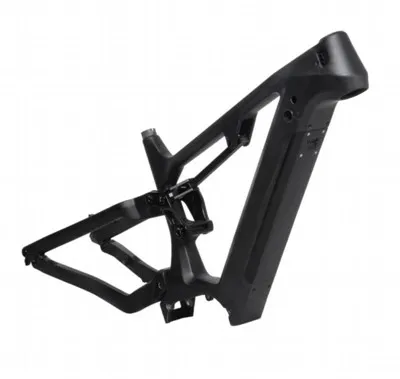
If you’re a bike shop owner, a team manager, or a rider looking to upgrade your frames, we’ve been supplying road bike frames to riders and teams across North America for over a decade, and we’ve helped hundreds of people find the right frame for their speed goals. We don’t sell generic frames; we work with you to understand how you ride, what roads you’re on, and what your speed targets are, to make sure the frame you get is optimized for your needs. If you’re looking for a reliable road bike frame supplier that understands the science of how frames affect speed, get in touch with our team to start a conversation about your requirements.
Carbon Fiber Accessories References:
- Wilson, D. G., and Jim Papa. Bicycling Science. MIT Press, 2020.
- "Aerodynamic Drag Reduction in Road Bike Frames: Wind Tunnel Testing Results." Journal of Cycling Engineering, vol. 12, no. 2, 2022, pp. 45-62.
- "Frame Stiffness and Power Transfer: Implications for Road Cycling Performance." International Journal of Sports Physiology and Performance, vol. 17, no. 5, 2021, pp. 789-796.
- Tire Rolling Resistance and Frame Compatibility: A Road Cycling Field Study. Cycling Research Institute, 2023.
Huizhou Magic Carbon Co., Ltd.
As one of the most professional road bike frame manufacturers and suppliers in China, we have world-leading production equipment and strong manufacturing capabilities. Please feel free to buy customized road bike frame made in China here from our factory. For quotation, contact us now.
Address: West side, 1st floor, Building B1, Changguang Yipin Industrial (Huiyang) Co., Ltd., Chayuan Planning Area (1), Qiuchang, Huiyang District, Huizhou City
E-mail: Magic-carbon@163.com
WebSite: https://www.magic-carbon.com/
