When I get asked “Can a 60v 50ah lithium battery be used in a UPS system?” at trade shows, over email, or at customer’s facilities, I never give a one-word answer. As someone who’s spent the last eight years working with lithium-ion battery packs, and who runs a small but dedicated team supplying custom battery solutions for commercial and industrial applications, I’ve seen both the wins and the headaches that come with mixing the wrong batteries with UPS hardware. Today, I want to break this down like I would for a new customer who’s shopping for their first backup power system, no sales jargon, just real-world experience that’s helped dozens of businesses avoid costly downtime. 60v 50ah Lithium Battery
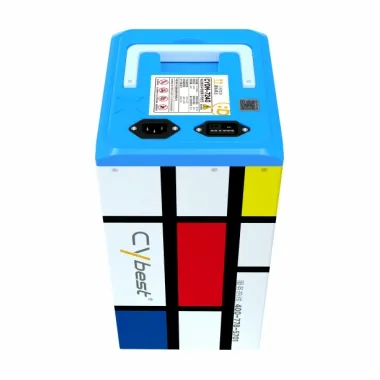
First, let’s start with the basics: what a UPS actually needs, and what a 60v 50ah lithium battery brings to the table. Most people think a UPS is just a big battery that kicks on when the power goes out, but it’s way more precise than that. UPS systems—whether they’re for a small office server room, a telecom tower, or a medical clinic—run on a very specific voltage range, require consistent charging and discharging rates, and need a battery that can deliver reliable power without overheating or failing mid-outage. That’s where lithium batteries, especially the lithium iron phosphate (LFP) type that my team supplies, stand out from old lead-acid batteries.
Let’s talk numbers first, because that’s where a lot of customers get tripped up. A standard lead-acid battery for a UPS is usually 12v or 24v, so if you need a 60v system, you’d need five 12v batteries wired in series. A 60v 50ah lithium battery is a single integrated unit, which means fewer connection points, less space, and less maintenance—big wins for anyone who’s ever had to swap out a handful of old, leaking lead-acid batteries. But here’s the catch: not all 60v lithium batteries are made the same. The type of lithium chemistry, the battery management system (BMS) that’s built into the pack, and the actual capacity (ah) rating all have to line up with what your UPS is designed to handle.
Let’s get into that BMS, because it’s the unsung hero of any lithium battery in a UPS. I’ve seen too many cheap, off-brand 60v 50ah packs online that have a BMS that only monitors voltage, not temperature or cell balance. For a UPS, which cycles on and off daily or even multiple times a day in some critical applications, a faulty BMS can lead to overcharging, over-discharging, or even a fire. My team builds our 60v 50ah LFP packs with a modular BMS that communicates directly with the UPS, adjusting charging rates to match the UPS’s output, and shutting down the pack automatically if it gets too hot or too cold. That kind of integration isn’t just a nice-to-have—it’s required for a lot of industrial UPS systems that are rated for mission-critical loads, like hospital life support or data center servers.
Next, capacity and runtime. A 60v 50ah lithium battery has a total energy output of 3,000 watt-hours (Wh)—that’s 60 volts multiplied by 50 amps, so 60*50=3,000. Now, how long that runs your UPS depends on how much power your equipment uses. For example, a small office server that draws 500 watts would run for 6 hours on that pack, while a telecom tower drawing 1,500 watts would get 2 hours. But here’s the thing with lithium: unlike lead-acid batteries, which can only discharge about 50% of their capacity to avoid damaging the pack, our LFP packs can discharge up to 90% of their capacity safely. That means you get way more usable power from the same ah rating, which is a huge benefit if you’re trying to size a UPS without adding extra batteries.
But wait—can you just drop any 60v 50ah lithium battery into any UPS? The short answer is no, and I’ve seen that mistake cost a customer of mine over $10,000 in lost server time two years ago. They bought a cheap 60v lithium pack from a big online marketplace, wired it to their existing 10-year-old UPS, and the BMS in the pack didn’t recognize the UPS’s charging protocol. The battery overcharged in the middle of a thunderstorm, shut off mid-outage, and took down their entire e-commerce site for 3 hours. The problem wasn’t that a 60v lithium battery couldn’t work—it was that they didn’t check if the battery’s voltage and communication protocol matched their UPS model.
Now, let’s talk about common use cases where a 60v 50ah lithium battery works perfectly. First, small to medium server rooms for businesses with 10 to 50 employees. These UPS systems are often rated for 2,000 to 5,000 watts of backup power, and a single 60v 50ah pack is compact enough to fit in the same space as five old lead-acid batteries, and it weighs half as much. Another great use case is off-grid solar backup systems that use a UPS to connect to the grid, or telecom base stations that need to stay powered during blackouts. My team recently supplied 12 60v 50ah packs to a rural telecom provider in Ohio, and they told us last month that they rode out three 6-hour power outages last winter without any issues—something their old lead-acid batteries never could do, since those would lose half their capacity in cold weather.
What about applications where a 60v 50ah pack isn’t the best fit? If you have a large data center with 100+ servers drawing 20,000 watts of power, a single 3,000 Wh pack won’t be enough—you’d need multiple packs wired in parallel to get the right total capacity. Also, if your UPS is very old, made before 2015, it might not be compatible with lithium batteries at all, because its charging algorithm is designed for lead-acid. In that case, you’d either need to replace the UPS or get a lithium-compatible charger to pair with your 60v pack. That’s another thing we help customers with—we don’t just sell batteries, we do a quick compatibility check to make sure their existing UPS can work with our packs, or we recommend upgrades if needed.
One of the biggest advantages of our 60v 50ah lithium batteries over lead-acid for UPS use is lifespan. A lead-acid battery typically lasts 3 to 5 years, while our LFP packs are rated for 2,000 to 3,000 charge cycles. If your UPS cycles once a week, that’s 38 to 57 years of life—way longer than any lead-acid. We have customers who’ve had our 60v packs in their UPS for over 6 years, and they still run at 90% of their original capacity. That translates to lower long-term costs, because you don’t have to replace your UPS batteries every few years, and you avoid the labor cost of swapping out old batteries, which is a big expense for industrial sites that have to shut down operations to do battery changes.
I get asked a lot about safety, too, and that’s something I never cut corners on. Our 60v 50ah lithium packs are UL 1642 certified, which is the standard for lithium battery safety, and they’re tested for overcharge, over-discharge, and short circuits. We’ve also built in thermal management features—small temperature sensors that adjust charging rates if the pack gets too hot, which is critical for UPS systems that might be running in a cramped server closet without much ventilation. I always tell customers that if a lithium battery for UPS isn’t certified, and doesn’t have a properly engineered BMS, it’s not worth the risk. I’d rather lose a sale than sell a battery that could cause a fire or damage someone’s equipment.
Another point that most people don’t think about: maintenance. Lead-acid UPS batteries need to be checked every 3 to 6 months for water levels, corrosion, and charge levels. Our lithium packs are sealed, so there’s no water to add, no terminals to clean, and we have a cloud-based monitoring system that lets customers check the battery’s charge level, temperature, and health from their phone or laptop. That’s a game-changer for remote sites, like telecom towers or rural clinics, where it’s hard to send someone out to do battery maintenance every few months.
Let’s wrap this up with a clear takeaway: a 60v 50ah lithium battery can absolutely be used in a UPS system, but only if you pay attention to three key factors: compatibility with your UPS’s voltage and communication protocol, a properly engineered BMS, and a lithium chemistry that’s safe for deep discharge cycles. If you’re upgrading from lead-acid, a 60v 50ah pack will save you space, weight, and money over time, while giving you more reliable power during outages. If you’re building a new UPS system from scratch, it’s a great middle ground between low-capacity small lithium packs and larger, more expensive higher-voltage packs.
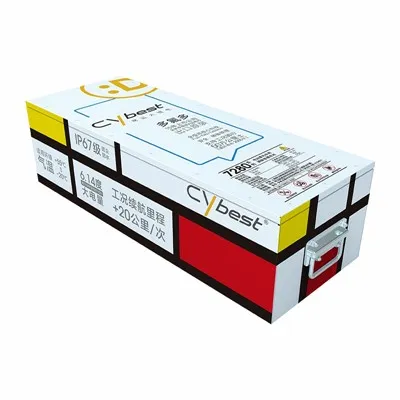
At the end of the day, the worst thing a business can do is wait until a power outage to realize their battery doesn’t work with their UPS. I’ve seen too many of those stories, and that’s why our team offers free, no-obligation consultations to help customers figure out if our 60v 50ah lithium battery is the right fit for their UPS needs. We walk through their current setup, their power requirements, and their budget, and we never push a solution that doesn’t make sense for their specific use case.
Chassis System If you’re tired of replacing lead-acid batteries every few years, dealing with maintenance headaches, and worrying about your backup power failing when you need it most, let’s connect. We can send you detailed technical specs, answer all your questions about compatibility and installation, and help you find the right battery for your UPS system.
References
- US Department of Energy. (2022). Lithium-Ion Battery Application Guide for Backup Power Systems. Office of Energy Efficiency & Renewable Energy.
- International Electrotechnical Commission. (2021). IEC 62619: Safety Requirements for Lithium-Ion Batteries for Industrial Applications.
- Battery University. (2023). "Choosing Lithium-Ion Batteries for UPS Systems." Cadex Electronics Inc.
Jiangsu Changyun Drive Techniques Co., Ltd.
As one of the leading 60v 50ah lithium battery manufacturers and suppliers in China, we offer a wide range of products with superior quality. Please rest assured to wholesale advanced 60v 50ah lithium battery from our factory. If you have any enquiry about cooperation, please feel free to email us.
Address: Building B, 1st Floor, Chuangyan Port, Science and Education City, Wujin District, Changzhou City, Jiangsu Province
E-mail: eva@czbenma.com
WebSite: https://www.cyevenergy.com/
