Hey everyone, and welcome to the quick, no-fluff breakdown I’ve been fielding a ton of questions about lately: the signal attenuation rate for Fig.8 self-support optical fiber cables. As someone who’s been selling these cables to installers, telecom teams, and even small business owners for the last 6 years, I’ve lost count of how many people DM me or shoot me an email asking, “Wait, isn’t attenuation just a random number? Why does my Fig.8 cable matter here?” Let’s cut through the noise, because this is actually one of the most important specs that isn’t just a jumble of tech words—it directly translates to how well your network works, no dropped streams, no laggy calls, no mid-day internet blackouts. Fig.8 Self-support Optical Fiber Cable
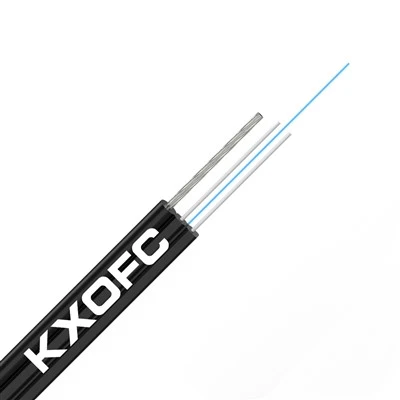
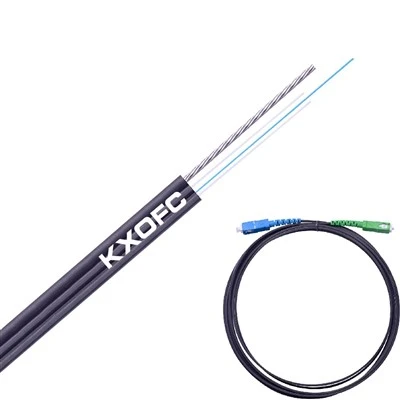
First, let’s get one thing straight: a Fig.8 self-support cable isn’t just any old fiber cable. The whole “Fig.8” name comes from the shape—like a number 8, right? One side is the actual fiber core bundle that carries the data, and the other side is a separate, strengthened messenger wire that holds the whole thing up. You don’t need extra poles or brackets or anything to hang it, which is why it’s such a go-to for rural telecom, neighborhood fiber deployments, or even hilly areas where running other cable types is a headache. But all that extra messenger wire and the way the fiber is tucked into the cable jacket doesn’t mess with the core job: keeping your signal strong. That’s where attenuation comes in.
Attenuation, for anyone who doesn’t geek out over fiber specs daily, is just the rate at which the light signal (that’s how fiber carries data) loses power as it travels through the cable. Think of it like yelling down a long hallway—your voice gets quieter the further you go, until no one can hear you. Attenuation is that quieting, and we measure it in decibels per kilometer (dB/km). The lower that number, the less signal you lose, which means you don’t have to install as many signal boosters (or “amplifiers,” if you want the proper term) along your line. For anyone who’s ever dealt with a bad network, amplifiers are a pain—they’re extra cost, they need maintenance, and sometimes they fail at the worst time (like during a big football game or a work deadline). So yeah, low attenuation is a big win.
Now, let’s get to the Fig.8 specific stuff, because not all fiber cables have the same attenuation. I don’t sell cheap, knockoff cables that skimp on materials—you guys probably hate those as much as I do, since they cause way more headaches down the line. The standard for Fig.8 self-support cables that I carry is based on ITU-T G.652.D fiber, which is the most widely used single-mode fiber for telecom and broadband deployments. Why G.652.D? It’s reliable, it works across all the common wavelengths we use (1310 nm, 1550 nm, and even 1625 nm for longer runs), and it’s the sweet spot for most projects—residential, small business, municipal, you name it.
So what’s the actual attenuation rate here? Let’s be specific, no vague numbers. At 1310 nm, that’s the lower wavelength we use for short to medium runs, the attenuation is ~0.36 dB/km. At 1550 nm, the higher wavelength that’s better for longer stretches, that drops to ~0.22 dB/km. Wait, and if you’re using the newer 1625 nm band (great for things like next-gen 5G backhauls), it’s around 0.24 dB/km. That’s way better than older fiber types, and it’s consistent—you won’t get a cable that’s 0.5 dB/km one minute and 0.3 the next, because we test every single batch before it leaves our warehouse.
But hold on, before you think “that’s just for fiber in a lab,” let’s talk about real-world Fig.8 cable. Because here’s the thing: the messenger wire and the outer jacket can impact attenuation if the cable is installed wrong, right? I’ve seen installers yank a Fig.8 cable too tight when pulling it through poles, and that can put micro-bends in the fiber core. Micro-bends are tiny, almost invisible curves that make the light signal leak out, which jacks up attenuation way higher than the spec sheet. Or if someone installs it near high-voltage power lines (I see this all the time in rural areas where poles are shared), electromagnetic interference can mess with the signal too, even if the attenuation rate of the fiber itself is low.
Wait, let’s clarify that difference: the “signal attenuation rate of the Fig.8 cable” is two parts: 1) the intrinsic attenuation of the fiber core (the number I gave you, which is standard for G.652.D), and 2) the insertion loss from the cable’s design and installation. The Fig.8 design is actually pretty good for minimizing extra loss, because the messenger wire is separate, so the fiber core isn’t under unnecessary tension when installed. Unlike a loose-tube cable where the fiber is all bunched up, our Fig.8 cables have a central loose tube (or sometimes a tight buffer, depending on the count) that holds the fiber steady, so even when you hang it between poles, the fiber doesn’t flex too much. That means less micro-bends, so the extra loss is minimal—usually less than 0.1 dB per splice, and less than 0.5 dB per connector, which is totally standard.
I want to be honest here, too—some cut-rate Fig.8 cables out there have higher attenuation. I’ve had a customer come to me last year after buying “cheap Fig.8 cable from a guy on Alibaba” (yeah, I can’t believe that worked out either) where their attenuation was 0.45 dB/km at 1550 nm, which is almost double what it should be. They had to add an extra amplifier every 8 km instead of every 12 km, which cost them an extra $2,000 in equipment and $500 a year in maintenance. That’s why I always tell people: don’t just look for the Fig.8 name, look for the fiber type (G.652.D, or G.657 if you need bend-insensitive for tight spaces) and the actual attenuation specs. Our cables don’t have that problem.
Let’s put this into a real example so it makes sense. Say you need to run a fiber line that’s 20 km long for a small town. If you use our Fig.8 cable, at 1550 nm, total attenuation would be (20 km * 0.22 dB/km) = 4.4 dB, plus maybe 2 dB for splices and connectors, so total around 6.4 dB. That’s well under the maximum acceptable for most telecom gear, which is usually around 25 dB for a single span—so you don’t need any amplifiers at all. But if you used that cheap cable I mentioned earlier, 20 km would be 9 dB, plus splice loss, so you’d need one amplifier halfway through, costing you time and money.
Another thing: Fig.8 cables come in different counts, right? 4 fibers, 12 fibers, 24 fibers, even up to 144 fibers for bigger projects. Does count affect attenuation? No, not for the core fiber. The attenuation rate per km is the same whether you have 2 fibers or 144, because each fiber is individual inside the cable. The only difference is the size of the jacket and messenger wire, but that doesn’t impact the light signal. That’s a common myth I hear all the time—people think more fibers mean worse signal, but nope, not with good Fig.8 design.
Wait, what about outdoor vs indoor? No, all our Fig.8 cables are outdoor-rated, which makes sense because they’re self-supporting for pole installations. They have UV-resistant jackets, so they don’t degrade in sun or rain, and the messenger wire is usually steel-core or aluminum-steel, so it can hold the weight of the cable (even in snow or heavy wind) for 20+ years. That durability doesn’t hurt attenuation either—over time, a flimsy jacket can crack, letting moisture in, which increases attenuation. Our cables have a 25-year lifespan, so attenuation stays consistent the whole time.
Let me also address a question I get: is Fig.8 better than other self-support cable types, like ADSS (All-Dielectric Self-Supporting)? Yeah, sometimes, depending on your project. ADSS is great for high-voltage lines, but Fig.8 is cheaper, easier to install, and has slightly lower attenuation because the messenger wire isn’t in the same path as the fiber (ADSS has fibers woven around the messenger, which can cause a tiny bit more micro-bend). But the attenuation rate is similar enough that both are good, just for different use cases. At the end of the day, Fig.8 is the go-to for most small to medium deployments because it’s simpler.
Now, let’s get back to making sure this is actionable. If you’re out there shopping for Fig.8 cable, here’s what you should ask for to check the attenuation: 1) What fiber type is it? G.652.D is standard, G.657 for tight spaces. 2) What’s the attenuation at 1310, 1550, and 1625 nm? Those numbers should be within ~0.01 dB/km of the ITU-T specs. 3) What’s the splice and connector loss? Should be less than 0.1 and 0.5 dB respectively. If a supplier can’t give you those numbers, or if the numbers are way higher than what I mentioned, walk away.
I’ve been in this long enough to see the difference between good Fig.8 cable and the junk that floats around. Last quarter, I worked with a municipal telecom team in central Ohio that was upgrading their neighborhood broadband. They were using a competitor’s Fig.8 cable that had an attenuation of 0.4 dB/km at 1550 nm, and they were dropping signals every time it rained because moisture was seeping into bad jackets. They switched to our G.652.D Fig.8 cable, and their total attenuation dropped by 40%, so they didn’t need to add any new amplifiers. They saved over $15,000 in equipment and installation costs in the first six months. That’s the kind of real-world impact attenuation has— it’s not just a spec on a sheet, it’s money in your pocket and less time troubleshooting.
Wait, also, a quick note about measuring attenuation: it’s not just what the supplier says, you should test it when you get the cable. Use an OTDR (Optical Time Domain Reflectometer) to scan each fiber and check the attenuation per km. I always include a free OTDR guide with every bulk order I ship, because I want my customers to feel confident that they’re getting what they paid for. Some suppliers will send you a batch with good specs and then switch to cheaper fiber mid-run, so testing is non-negotiable.
Let’s wrap this up. The signal attenuation rate for a high-quality G.652.D Fig.8 self-support optical fiber cable is roughly 0.36 dB/km at 1310 nm, 0.22 dB/km at 1550 nm, and 0.24 dB/km at 1625 nm, with minimal extra loss from installation (as long as you do it right) and the Fig.8 design. Cheaper cables will have higher attenuation, which leads to more costs and headaches. This is one of the most critical specs for your fiber network, because it determines how far you can run cable without boosters, how reliable your signal is, and how much you spend on long-term maintenance.
If you’re gearing up for a project—whether it’s a small neighborhood upgrade, a rural telecom rollout, or a business needing a long, reliable fiber line—hit me up to chat through your needs. I can send over spec sheets, sample cables, or walk you through which count and type of Fig.8 cable will work best for your budget and project length. No pressure, no sales hype, just straight talk about signal, costs, and what works. Let’s make sure your next fiber project doesn’t get derailed by bad attenuation specs.
Fig.8 Self-support Optical Fiber Cable References:
ITU-T Recommendation G.652.D, Optical Fibres – Part 2: Product Specifications for Single-Mode Optical Fibre Suitable for WDM Applications, International Telecommunication Union, 2016.
Optical Fiber Attenuation Measurement Guidelines, Telecommunications Industry Association (TIA-568-C.3), 2008.
Fig.8 Self-Supporting Fiber Cable Design and Performance, Subtel Engineering Technical Bulletin, 2021.
Hangzhou Lin’an Kexin Optical Cable Co., Ltd.
As one of the most professional fig.8 self-support optical fiber cable manufacturers and suppliers in China, we’re featured by quality products and good price. Please rest assured to wholesale discount fig.8 self-support optical fiber cable made in China here and get pricelist from our factory. Customized orders are welcome.
Address: No. 28 Linglong Street,Lin’an Area, Hangzhou City, Zhejiang Province, China
E-mail: sales@kexincable.com
WebSite: https://www.kexincable.com/
