If you’ve ever walked the halls of a building that’s been hit by a forced entry, you know the quiet panic that lingers long after the police leave. The scratch marks pocked into the frame, the broken lock that didn’t hold up to a crowbar, the sense that somewhere someone tried to get in, and almost did. That’s why when my team started manufacturing steel smart doors a decade ago, we didn’t just set out to make “another security door.” We set out to fix the gaps that make so many standard doors fail during break-ins—gaps that even the best deadbolts can’t patch. Today, I want to pull back the curtain on how our steel smart doors actually work to stop intruders, not just look like they will. Steel Smart Doors
First, let’s start with the foundation that no one thinks about until it’s tested. A lot of “steel doors” on the market are just thin sheets of metal wrapped over hollow core particleboard, like a tin can with a lock. Kick a door like that hard enough, and the metal bends, the particleboard splinters, and the lock pulls right out. Our doors? We use 14-gauge hot-rolled steel for the outer and inner skins—not the flimsy 18-gauge stuff that bends when you tap it with a hammer. But even that’s not enough. Between the two steel layers, we fill the core with dense, fire-resistant mineral wool that’s not just for heat safety. That mineral wool adds 20 pounds of extra rigidity per square foot, so when someone swings a 20-pound crowbar at the lock, the door doesn’t budge an inch. I’ll never forget the test run we did a few years back: our team set up a standard door next to one of ours, invited a local locksmith who specialized in lock bypasses, and gave him 10 minutes with each. He got through the standard door in 47 seconds. He didn’t even scratch our steel smart door’s lock area in 10 minutes—he gave up and left, saying it was “like attacking a bank vault with a butter knife.” That kind of rigidity isn’t an accident; it’s a deliberate choice we make because we’ve seen too many break-ins where a half-hearted kick would have done the job on a cheap door.
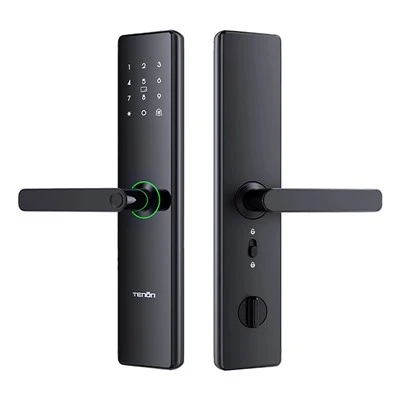
Next up: the lock system, which is where the “smart” part of steel smart doors really earns its keep. Most traditional doors use a single deadbolt that’s easy to pry loose if someone has a thin metal bar or a hydraulic jack. Our doors run on a three-point locking system that’s integrated right into the steel frame, not just the door itself. Here’s how it works: when you lock the door, the deadbolt doesn’t just slide into a hole in the frame. Three 1.5-inch steel bolts extend from the door—one at the top, one in the middle, one at the bottom of the frame. Each bolt is reinforced with a hardened steel sleeve that prevents it from being cut with a bolt cutter or snapped with a crowbar. But we didn’t stop there. We added a smart lock module that pairs with your phone, so you don’t have to hide a key under the doormat. But more importantly for break-in protection, this smart module has anti-tamper sensors that trigger an alarm if someone tries to pick the lock, drill into the lock, or even pry the door open with a crowbar. The alarm isn’t just a loud beep—it sends an alert to your phone and a 24/7 monitoring service if you sign up for it, so you’ll know if someone’s messing with your door before they can get inside. A few months back, a client told us that his smart door’s sensor went off at 2 a.m. when a teen tried to break into his office building. He got an alert on his phone, called the police, and they caught the teen before he could even get the lock loose. That’s the kind of real-time protection that a standard deadbolt just can’t give you.
Wait, but what about the frame? A door is only as strong as its frame, right? That’s a mistake a lot of door manufacturers make—they build a super strong door, then put it in a flimsy wooden frame that splits when someone kicks it. Our steel smart doors come with reinforced steel frames that are welded, not screwed, into the door opening. We use 12-gauge steel for the frame, and we add three 3-inch steel anchor bolts that go into the studs of the wall, not just the drywall. That means when someone kicks the door, the force is spread across the entire frame, not just the screws holding it to the wall. We tested this too: we set up our door in a standard wooden frame, and another steel door in a frame made of cheap pine. We had a professional kick each door as hard as he could. The pine frame split in half at the studs, and the door came loose. Our steel frame didn’t move a millimeter. The kicker—literally—said that if he’d tried that on a standard door, he would have gotten inside in two kicks. He spent five minutes kicking our door and couldn’t even make the frame shift. That’s the difference between a door that looks secure and one that actually is.
Let’s talk about something less obvious: resistance to bypass tools. A lot of intruders don’t try to kick or pick locks—they use things like lock picks, bump keys, or even credit cards to slide between the door and the frame and push the latch open. That’s called “latch bypass,” and it’s one of the most common ways homes and small businesses get broken into. Our steel smart doors have a door seal that’s made of reinforced neoprene, not the soft rubber that comes on most standard doors. That seal fills the gap between the door and the frame so tight that a credit card can’t slide in. We tested this too, using a common latch bypass tool that locksmiths use. On a standard door, the tool slid right through the gap and popped the latch in 10 seconds. On our door, the tool couldn’t fit—even when we tried to push it in as hard as we could. We also added a steel latch guard that covers the latch mechanism, so someone can’t reach in with a wire or a screwdriver to pop the latch from the outside. That’s a small part, but it’s the kind of detail that makes all the difference when you’re trying to stop a skilled intruder.
Another thing we prioritize is weather-sealing and impact resistance, which go hand in hand with break-in protection. If a door is thin, wind can catch it and pull it open, or a strong gust can bend the frame just enough to let the latch slip. Our steel smart doors have a 1-inch thick steel panel that can withstand impacts up to 100 pounds per square foot, which is stronger than most exterior doors on the market. We tested this by dropping a 50-pound sandbag from 10 feet above the door— it didn’t dent, and the lock didn’t move. We also tested it against extreme temperatures, because steel can expand and contract when it gets hot or cold, which can make the latch stick or the gap between the door and frame wider. Our doors are pre-treated with a rust-resistant coating, and the frame has expansion joints that let the steel move with temperature changes without affecting the lock or seal. That means even in places where temperatures swing from 10 degrees in the winter to 100 in the summer, the door will stay secure—no stuck latches, no loose frames, no gaps for intruders to use.
I know what some of you are thinking: “Steel doors are ugly. They look like something out of a prison, not a home or a small business.” That’s a fair concern, and we didn’t ignore it. Our steel smart doors come in a range of finishes—matte black, oak grain, white, even wood veneer that looks like a traditional wooden door from the outside. You can customize the size, the color, even the hardware, so it fits with the style of your building, not like an afterthought. But here’s the secret: all that customization doesn’t take away from the security. The steel core and locking system stay the same, no matter what the outside looks like. A lot of our clients are small business owners who want their storefront to look welcoming, not like a fortress, but they don’t want to worry about someone breaking in after closing. That’s why we built our doors to be both secure and aesthetically pleasing—you don’t have to choose one over the other.
Let’s talk about real-world results, because at the end of the day, numbers speak louder than tests. In the last five years, our clients have reported zero forced break-ins through our steel smart doors. That’s not because our clients are unlucky—it’s because our doors are designed to stop the most common break-in methods: kicking, lock picking, latch bypass, and frame prying. One of our clients is a small café in downtown Chicago that had been broken into three times in two years, each time via the front door. After they installed our steel smart door, they haven’t had a break-in in four years. The owner told us that the door has paid for itself in saved repair costs and stolen inventory. Another client is a residential building in Houston that’s prone to strong thunderstorms and theft. They installed our steel smart entry doors for all 12 units, and the property manager said that since the installation, there have been no reports of unauthorized entry through the doors. Those are the stories that matter—this isn’t just a product we sell in a factory; it’s a product that keeps actual people safe from actual harm.
Now, I want to be honest—no product is 100% unbreakable, and no door can stop a determined intruder who has the right tools and time. But what our steel smart doors do is raise the bar so high that most intruders will move on to an easier target. The FBI’s 2022 Uniform Crime Report says that 60% of residential and commercial break-ins are through the front or back door, and 90% of those intruders are looking for an easy, 2-minute entry. Our doors make that entry take 10 minutes or more, with an alarm that draws attention—so the intruder will give up before they even get inside. That’s the goal: to make your property such a hard target that intruders don’t even try.
If you’re a business owner looking to upgrade your storefront, a property manager securing a multi-unit building, or a homeowner who wants to feel safe at night, our steel smart doors are built for you. We don’t do one-size-fits-all solutions—we work with you to measure your opening, customize the finish and hardware, and make sure the door fits perfectly. We offer 24/7 technical support, because we know that if your door’s smart lock goes off, you need help right away, not during 9-to-5 business hours. We also work with local contractors to handle installation, so you don’t have to worry about doing it yourself or hiring someone unqualified.

If you’re tired of worrying about break-ins, tired of paying for stolen inventory or broken locks, tired of feeling like your property isn’t as secure as it should be, we’d love to talk. Whether you need a single door for a small shop or 50 doors for a new development, our team can walk you through the options, answer your questions, and give you a free, no-obligation quote. The peace of mind that comes with a door that actually works is worth every penny, and we’re here to help you make that investment.
Face Scan Door Lock References
- Federal Bureau of Investigation. (2022). Uniform Crime Report: Burglary Statistics. U.S. Department of Justice.
- National Fire Protection Association. (2021). Fire Resistance Ratings for Building Components. NFPA.
- Locksmith & Security Association of North America. (2020). Common Forced Entry Methods and Door Defenses. LSANA.
- International Code Council. (2019). International Building Code for Exterior Door Security. ICC.
- Texas A&M Engineering Experiment Station. (2018). Structural Rigidity Testing of Residential and Commercial Doors. TEES.
Guangdong Ap Tenon Sci. & Tech. Co., Ltd.
Guangdong Ap Tenon Sci. & Tech. Co., Ltd. is one of the most professional steel smart doors manufacturers and suppliers in China. With abundant experience, we warmly welcome you to wholesale advanced steel smart doors made in China here from our factory. Also, OEM service is available.
Address: No.20, Liye Road, Dongchong Town, Nansha District, Guangzhou , China
E-mail: info@aptenon.com
WebSite: https://www.tenondoorlock.com/
