If you’ve ever spent time in a modern lab, a tech startup’s testing floor, or even a university’s research wing, you’ve probably seen a bench that looks way different from the rickety metal ones you might remember from high school science class. It adjusts height on its own, has built-in outlets and data ports that sync to your laptop, and even stores your tools in modular slots that move when you need them. Chances are, you were staring at a parametric bench—and if you’re reading this, you’re probably wondering what the heck that actually means, or if it’s worth ditching your old static workbench for one. Parametric Bench
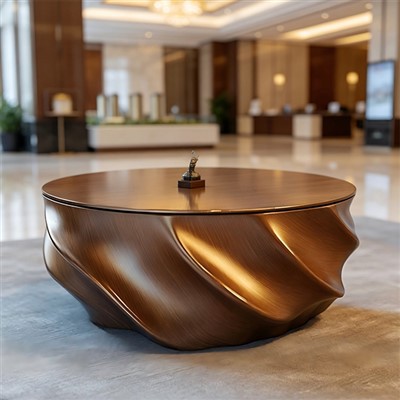
Let’s cut the jargon right off the bat. A parametric bench isn’t just a fancy worktable. It’s a smart, adaptable work surface built for teams and individuals who need their space to change with what they’re doing—instead of forcing them to adapt to a fixed, one-size-fits-all bench. The “parametric” part comes from how it’s designed to respond to specific, adjustable parameters: height, angle, power, storage, even how it connects to other devices, all controlled by simple, intuitive settings, not clunky parts you have to turn with a wrench.
Wait, hold up—don’t mix this up with a basic adjustable standing desk, though I get why you might. Those are great for switching between sitting and standing, sure. But a parametric bench is built for way more use cases than just writing code or assembling a laptop. Think about what work in labs, testing bays, or custom manufacturing actually looks like. A biomedical researcher might need to adjust their bench 6 inches higher to fit a microscope, then lower it back down to pipette a sample 10 minutes later. An engineer testing a prototype robot might need their bench’s side railings to flip up to secure the part mid-test, then flip down to slide the finished product off. A UX designer might want their screen tilted at 15 degrees for sketching, then shifted to a flat angle for presenting to a team. All that should be seamless, not a whole production to swap clamps or replace parts.
That’s the core of what makes a parametric bench different. It’s built to be configurable on the fly, not just when you first set it up. Early on, a lot of people in our industry called these “smart workbenches,” but that term got watered down by all sorts of gadgets bolted on to regular tables. We realized the real value is in the parametric design—every part is adjustable to match what you’re working on, no extra add-ons needed.
Let’s break down the key features that make a bench truly parametric, not just a gimmicky desk. First, the adjustable work surface is non-negotiable, and it’s not just height. We’re talking electric height adjustment that can go from 28 inches (standard sitting height) all the way to 48 inches for standing or working with large equipment. Some of our models even have angle adjustment for the tabletop—tilting up to 45 degrees for tasks like drafting, or tilting back for ergonomic comfort during long work sessions. No more stacking books or wooden blocks to get the right angle; one button does it.
Then there’s the integrated tech, which is where the “smart” part ties into the parametric system. Most parametric benches have built-in power and data ports, but here’s the parametric twist: they rearrange to fit where you need them. For example, a lab tech working on a large assay plate might want power ports on the far right of the bench, while a software engineer debugging a server rack might need them on the left. The modular ports snap into slots along the bench’s edge, so you can move them in 1-inch increments—no drilling, no tools. Some of our higher-end models even sync to your device: plug in your laptop, and the bench will remember your preferred height, angle, and port positions for that exact task, so you never have to adjust manually again.
Storage is another big one that people sleep on. Old workbenches have fixed cabinets or shelves, which means half your stuff is either impossible to reach or in the way 90% of the time. A parametric bench’s storage is modular, too. The tool rails that run along the sides of the bench have interchangeable holders for wrenches, pipettes, screwdrivers, whatever you use. Those holders slide along the rail, so a technician working on automotive parts can have their socket set within arm’s reach on the left, while a biologist can have their centrifuge tubes on the right. Even under-bench cabinets are adjustable; you can rearrange the shelves to fit large storage bins for prototypes or small boxes for samples, no custom cutouts needed.
Why does this matter more than just a regular adjustable desk? Let’s get real about how work actually works. A lot of teams switch tasks multiple times a day, even multiple times an hour. A researcher might start with a data analysis task at a low height, shift to pipetting samples at a medium height, then to assembling a new piece of lab equipment at a high height—all in a 2-hour window. If they had a regular desk, they’d have to adjust a crank or fumble with a manual lever every time, which adds up to wasted time and breaks their focus. With a parametric bench, it’s two taps on a touchscreen or even a quick voice command, if you want.
Don’t get me wrong—this isn’t just for big labs or fancy tech startups. We’ve sold parametric benches to small machine shops, art studios, even high school STEM programs. A local woodworking shop we work with uses their parametric benches to switch between sanding small wood pieces at an angle, assembling furniture at a sitting height, and finishing large panels at a standing height. The teacher at that high school told me last month that the benches cut down on the amount of time her students spend asking for help adjusting workspaces, and they’re actually more excited to use the lab because it feels like a “real work space” instead of something from a textbook.
Wait, let’s address the elephant in the room: cost. A lot of people see the price tag and think, “That’s way more than a regular workbench.” Yeah, it is—at first. But let’s do the math. How much time does your team waste adjusting clamps, rearranging work areas, or even dealing with ergonomic issues from using a bench that doesn’t fit? Studies on workplace ergonomics from the Occupational Safety and Health Administration (OSHA) show that musculoskeletal disorders from poor workspaces cost U.S. businesses over $15 billion a year in lost productivity and workers’ comp. A parametric bench cuts that way down, because it’s built to fit the user, not the other way around. Plus, these benches last way longer than regular ones—we’ve got models that are 10 years old still going strong for a client who runs a large testing lab. It’s an investment, not a cost, and most teams see a return on that investment in 2 to 3 years, not a decade.
Another thing that surprises a lot of people: parametric benches are actually super customizable, but not in the “pay an extra $10k for a custom color” way. You pick the base features you need first. Do you need water and gas lines for lab work? We can add those, modular, so you don’t have to drill holes into the bench. Do you need heavy-duty surfaces for manufacturing? We’ve got benches with powder-coated steel tops that can hold thousands of pounds, vs. lightweight laminate for design work. Need to link multiple benches together for a team project? The sides have snap-in connectors, so you can create a long, continuous surface in minutes, no tools.
I get it, if you’ve never used one, it sounds like a lot of tech for a workbench. But here’s the thing: we built these because we saw people frustrated with the status quo. When I first started in the workbench industry 15 years ago, everyone just sold the same old static metal tables. Labs and startups would jerry-rig their own adjustable parts, taping ports to the sides and stacking plywood to get the right angle, and it never worked right. So we set out to build a bench that actually solves real problems, not just checks a box for “smart office furniture.”
If you’re still on the fence, think about what your workday looks like. Do you switch tasks a lot? Do multiple people use the same bench, with different needs? Do you waste time adjusting your space instead of focusing on the work? If you answered yes to any of those, a parametric bench is probably worth checking out. We don’t do pushy sales stuff—we’ll send you a free spec sheet, even let you rent one for a week to test in your space if you want, no strings attached.
At the end of the day, work should feel like it’s supporting you, not the other way around. A parametric bench isn’t just a piece of equipment—it’s a space that adapts to what you’re building, testing, creating. No more fighting with your work area. No more wasting time on tiny adjustments. Just more time to do the stuff that actually matters.

If you’re ready to stop settling for a workbench that’s holding you back, shoot us a message to set up a chat about your needs. We can walk you through different models, help you pick the right features for your team, and answer any questions you have. Don’t let your work space be the reason you’re slowing down—let’s build something that works for you.
Minimalist Sculpture References:
Occupational Safety and Health Administration. (2023). Ergonomics: The Study of Work Design. U.S. Department of Labor.
International Data Corporation. (2022). Global Smart Workplace Equipment Market Analysis. IDC Publishing.
American National Standards Institute. (2021). Workbench Design for Laboratory and Industrial Applications. ANSI/BHMA A156.10-2021.
Huizhou Boruidi Industrial Co., Ltd.
Address: Area B, Yihong Industrial Park, Xinlian Village, Huiyang District, Huizhou City, Guangdong Province
E-mail: info@boruidi.com
WebSite: https://www.boruidi.com/
