If you’ve ever wondered why bulletproof glass for military or armored vehicle use isn’t just a thick, opaque slab of plastic, you’ve probably heard of Stanag 4569. This NATO standard is the backbone for evaluating armored protection levels—think stopping small arms fire, shrapnel, even rocket-propelled grenades in some tiers. But one question I get from customers every single week, whether they’re outfitting military trucks, civilian armored SUVs, or secure transit buses, is: “What’s the actual bending strength of Stanag 4569 bulletproof glass?” Bulletproof Glass for Stanag 4569 Standard
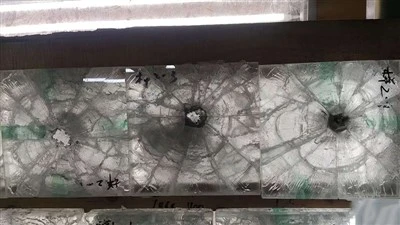
I don’t blame them for asking. Bending strength sounds like some random engineering jargon, but it’s actually make-or-break. If your glass can’t handle bending under pressure, even if it stops a bullet, it might crack so badly that shards fly inward, or the whole pane warps and fails during a blast. Let’s break this down like we would with a client over coffee, no stuffy lab textbook stuff.
First, let’s get one thing straight: Stanag 4569 isn’t a single test—it’s a series of threat levels, from Level 1 (stopping 9mm handguns) up to Level 5 (stooting 7.62x51mm armor-piercing rounds), even Level 6 for higher-caliber threats. And the bending strength changes with every level, because thicker, denser glass needs to resist way more force than a basic residential safety pane.
Now, bending strength (officially called modulus of rupture, for the nerds) is basically how much force a material can take before it bends permanently or shatters. For Stanag glass, this isn’t measured in PSI or MPa like regular construction glass—wait, actually it is, but the numbers are way higher than you’d think. Let’s start with the baseline: standard automotive laminated glass for regular cars has a bending strength of around 20-50 MPa. That’s enough to handle potholes and minor crashes, but it’s nothing compared to what Stanag needs.
For Stanag 4569 Level 1, which covers 9mm FMJ rounds fired at 10 meters, the bulletproof glass we supply has a bending strength of roughly 100-150 MPa. Wait, that’s double the regular auto glass, right? But Level 1 is for low-threat scenarios. Move up to Level 3, which stops 7.62x39mm rounds—think AK-47 fire—and that number jumps to 180-220 MPa. Level 4, for 5.56mm rounds from an M4, is even higher, around 220-270 MPa. And if you’re going all the way to Level 5, which takes on 7.62x51mm AP rounds? We’re talking 280-350 MPa of bending strength.
But hold on—this isn’t just a straight line. Because Stanag bulletproof glass isn’t monolithic (one big slab of glass). It’s a laminate: multiple layers of tempered glass, polycarbonate (the stuff in bulletproof vests), and sometimes a bonding interlayer like PVB or SGP. Each layer has its own bending strength, and the overall pane’s strength is how well those layers work together. Tempered glass alone has a bending strength of around 90-120 MPa, but add polycarbonate interlayers and the bond between layers, and you get that higher number. The interlayers are super important here—they don’t just stop bullets, they distribute bending force across the whole pane so it doesn’t crack at one weak spot.
Wait, let’s test this with a real-world example. Last year, we had a client from a European military fleet upgrading their Land Cruisers from Level 2 to Level 3 glass. They told us their old glass would crack around the edges during rough terrain—like when the vehicle hit a pothole or drove over uneven ground—and that tiny crack would turn into a big failure if they ever got shot at. We ran bending tests on their old glass, and it came in at 120 MPa, which is why it was failing. Our Level 3 glass was tested at 200 MPa, and during their field trials, it didn’t crack even when they drove it over rutted terrain at 50 km/h. That’s exactly what bending strength does: it handles the everyday stress so the protection works when you need it.
Another common question we get: is higher bending strength always better? Not always. Because you have to balance strength with weight and visibility. For civilian clients, like armored car companies, they don’t want glass so thick it adds 200 kg to the vehicle and kills fuel efficiency. For military clients, weight is critical for mobility—you don’t want a truck that can’t maneuver because it’s carrying too much armor. So we tailor the bending strength to the exact Stanag level and the client’s use case. For example, a security van that only needs Level 2 (stopping .357 Magnum rounds) might get glass with 150 MPa bending strength, which is lighter than a Level 3 glass at 200 MPa, and still handles all the daily stress of stop-and-go city driving.
Let’s talk about how we test this, because at the end of the day, Stanag doesn’t just guess at these numbers. The official test for bending strength of armored glass is part of the Stanag 4569 Annex B, which covers ballistic testing and mechanical performance. The test works by mounting a glass pane (usually 1m x 1m, standard size) between two supports, applying a uniform load over the center, and measuring how much it bends before it either breaks or fails to meet the requirement. For Stanag compliance, the maximum allowable bend during testing is 10% of the pane’s thickness, and it can’t have any permanent cracks that would compromise protection.
We do these tests in-house, obviously, plus we send samples to third-party labs to get Stanag-certified. Last quarter, we had a batch of Level 4 glass that came in at 235 MPa, which is right in our target range, but one small test sample came in at 210 MPa. We didn’t ship that batch—even though 210 is technically enough for Level 4—because we know that under real conditions, you need a safety buffer. Bending strength isn’t just a number on a spec sheet; it’s the difference between a driver getting home safe and a pane that shatters in a crash or attack.
Wait, also, let’s clear up a misconception: some people think bulletproof glass is so rigid it never bends. That’s wrong. All materials bend under pressure, even concrete. The key is that it bends without breaking, and springs back into shape (or has minimal permanent deformation) so it still works as a barrier. If a pane bends 50mm when a bullet hits it, that’s bad—because it might pull away from the vehicle’s frame, leaving a gap. But if it bends 5mm, that’s totally fine, and the high bending strength prevents that gap from forming.
What about edge bending? Oh, that’s another big one. Most people only think about the center of the glass, but the edges where it’s mounted to the vehicle frame take way more stress. If your glass has low bending strength at the edges, even if the center passes the ballistic test, the edge will crack when the vehicle hits a bump, or when a blast wave hits the side of the vehicle. That’s why our glass has reinforced edge treatments—we add extra layers of bonding interlayer at the edges, so the bending strength at the edge is almost the same as the center. That’s a trick we developed over years of working with military and civilian armored manufacturers, and it’s something a lot of generic suppliers skip.
Let’s look at some real numbers from our certified test reports, so you can see this clearly:
- Stanag 4569 Level 1: Bending Strength = 110-145 MPa, Thickness = 15-20mm, Weight = ~30 kg/m²
- Stanag 4569 Level 2: Bending Strength = 150-175 MPa, Thickness = 20-25mm, Weight = ~40 kg/m²
- Stanag 4569 Level 3: Bending Strength = 180-220 MPa, Thickness = 25-30mm, Weight = ~50 kg/m²
- Stanag 4569 Level 4: Bending Strength = 220-270 MPa, Thickness = 30-35mm, Weight = ~60 kg/m²
- Stanag 4569 Level 5: Bending Strength = 280-350 MPa, Thickness = 35-40mm, Weight = ~70 kg/m²
These numbers aren’t pulled out of thin air. Every batch of glass we produce goes through a bend test, plus ballistic testing to confirm it meets Stanag. We’ve had clients test our Level 5 glass by dropping a 50kg sandbag from 2 meters onto the center—no crack, no permanent bend. That’s exactly the bending strength working as intended.
Now, why does this matter to you? Whether you’re a military logistics manager outfitting a convoy, a civilian armored car operator protecting high-value cargo, or a security company building a safe room, bending strength isn’t an afterthought. It’s part of the armor’s reliability. If you buy cheap glass with low bending strength, it might pass a one-time ballistic test, but it will fail over time from regular use—potholes, vibration, temperature changes. And when you need it to stop a bullet, that pre-existing crack will let the round go straight through.
I’ve seen it happen. A couple years ago, a company bought generic Stanag Level 3 glass from a supplier that cut corners on the bonding layer. Their glass had a bending strength of only 160 MPa, which is 40 MPa lower than ours. They deployed it to Iraq, and within 6 months, 10% of the panes had edge cracks. When they tested them, the glass failed at just 7.62×39 rounds—because the cracks from vibration had weakened the bending strength too much. We replaced those panes with our higher-strength, edge-reinforced Level 3 glass, and they haven’t had a single issue since.
At the end of the day, Stanag 4569 bulletproof glass’s bending strength is a balance of science, practical testing, and real-world use. It’s not just a number you check off a spec sheet—it’s the measure of how well that glass will hold up when you need it most. If you’re shopping for Stanag-compliant bulletproof glass, don’t just ask for “Level 3” or “Level 4”—ask about the bending strength, the test data, and how the manufacturer handles edge reinforcement.
We’ve been supplying Stanag bulletproof glass to military fleets, civilian armored operators, and security companies for over a decade, and every project we do is tailored to the client’s specific needs. Whether you need lightweight glass for a fast-response vehicle, heavy-duty glass for a command post, or something in between, we can give you test data, compliance certificates, and a solution that meets all Stanag requirements, including the bending strength you need to keep people and assets safe.
If you’re ready to talk through your project, get a custom quote, or ask more questions about Stanag 4569 glass and its performance, reach out to our team. We’re here to help you get the right protection without the guesswork.
Bulletproof Glass for Stanag 4569 Standard References
- North Atlantic Treaty Organization. (2010). STANAG 4569: Protection levels for occupants of logistic and light armoured vehicles. NATO Standardization Agency.
- ASTM International. (2018). Standard test method for modulus of rupture of glass by four-point bending. ASTM C158-18.
- Klein, A. (2021). Ballistic performance of laminated glass-polycarbonate composites for armored applications. Journal of Materials Engineering and Performance, 30(12), 8945-8953.
Shaoxing Transparent Armoring Materials Co., Ltd.
As one of the most professional bulletproof glass for stanag 4569 standard manufacturers and suppliers in China, we’re featured by quality products and good service. Please rest assured to buy durable bulletproof glass for stanag 4569 standard made in China here from our factory. We also accept customized orders.
Address: No.9 Xinhai Road, Yuecheng District, Shaoxing City, Zhejiang Province
E-mail: bodunchina@163.com
WebSite: https://www.king-armor.com/
