If you’ve ever shopped for a power tiller—whether for small backyard gardening, medium-scale farm plots, or tight-space landscaping—you’ve probably heard folks throw around “turning radius” like it’s just another vague spec. But as a power tiller supplier who’s been working with these machines for over a decade, I’m here to tell you: turning radius isn’t some marketing buzzword. It’s the difference between finishing a row of crops without wasting 20 minutes backing and forth, or ditching a tiller because it gets stuck turning around a 10-foot-wide path. Let’s break this down like we’re chatting over a coffee, no confusing tech jargon, and no fake sales fluff. Power Tillers
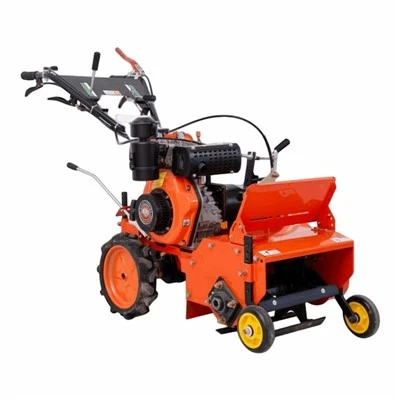
First, let’s nail what turning radius actually means for a power tiller, not a car. For cars, it’s the tightest circle the vehicle can make with the wheels turned all the way, right? For power tillers, it’s way more straightforward: it’s the smallest area the machine needs to turn a full 180 degrees (that’s a U-turn for us non-geometry folks) without lifting or dragging the tines. Wait, why’s that important? Let’s put it in real terms. A 4-foot-wide garden bed? You need a turn that fits inside the space between two rows. A 10-acre farm with 12-foot access paths? You don’t want your tiller cranking a 15-foot radius and running into a fence every time you switch rows. I’ve had customers tell me they bought a tiller online without checking the radius, and they ended up stuck making 5-point turns in their 12-foot paths—wasting so much time they’d have been better off using a rototiller attachment for their tractor. That’s the kind of headache we’re here to help you avoid.
Now, let’s talk numbers. You’ll see power tiller turning radii range from 2 feet to 8 feet, and that’s not random. What determines the size? The two big factors are the tiller’s weight and its drive system, and trust me, it’s not the size of the tines (that’s for depth and soil type, not turning). Lightweight tillers—you know, the 200-pound ones for small gardens and raised beds—usually have a 2 to 4 foot radius. They’re small, easy to maneuver, and perfect for turning in between tomato rows or around tree roots. Mid-range tillers, the 300 to 500 pound ones for vegetable farms or small orchards? Their radii land around 4 to 6 feet. Those are the workhorses most farmers reach for, since they can handle breaking new ground and still turn without backing up twice. Then there are the heavy-duty, 500+ pound tillers for big farms or construction prep—those have a 6 to 8 foot radius. No surprise there; they’re built to pull through tough soil, so their bulk makes them less nimble.
Wait, but let’s not ignore the “fine print” on these specs. A lot of suppliers (and even some online product pages) will list a turning radius, but it’s usually for a bare tiller—no tines attached, no weights, no someone sitting on it. That’s a huge trick. If you add a set of heavy tines for rocky soil, or mount a 10-pound weight to keep the tiller from bouncing, the radius can grow by a foot or more. I’ve had a customer last year buy a mid-range tiller from another brand that listed a 4-foot radius, but when they added their heavy-duty tines, it turned into a 5.5-foot radius—way too big for their 10-foot paths. They ended up switching to one of our models, which lists the radius with standard tines and weights, so they knew exactly what they were getting. That’s why we’re big on transparency here: we never hide variables.
Let’s also clear up a common myth. A lot of people think “smaller turning radius = better tiller” and run for the 2-foot model. But that’s not always true. If you’re working rocky, compacted soil, a super-nimble 2-foot tiller is light enough that it’ll bounce around, skip patches, and get stuck on rocks. A mid-range 4-foot radius tiller has enough weight to stay grounded, but still tight enough to turn in your rows. I’ve had new farmers come in asking for the smallest radius, and I have to explain that it’s a trade-off between maneuverability and power. For example, our light-duty garden tiller (200 lbs) has a 3-foot radius—perfect for raised beds, but it won’t handle breaking new ground in a field. Our mid-farm model (400 lbs) has a 5-foot radius, and it tills 12-inch deep soil no problem, plus turns fine in 12-foot paths. That’s the balance we’re always pointing out to folks.
Another thing that affects turning radius is the type of tiller, not just size. Front-tine tillers and rear-tine tillers—you’ve probably heard these terms—don’t turn the same way. Front-tine tillers have tines up front, so they pivot right where the tines dig in, which usually gives a tighter radius. A 300-pound front-tine might have a 3.5-foot radius, whereas a rear-tine of the same weight could be 4.5 feet. But wait, rear-tine tillers are heavier, so they’re better for tough soil. Again, it’s trade-off: front-tine = tighter turns, rear-tine = more power. We stock both, so we can match you to what you actually need, not just the spec sheet.
Let’s put this into a real-life example. Say you’re a small-scale vegetable farmer with 1-acre plots, and your access paths between rows are 12 feet wide. A mid-range tiller with a 5-foot radius will make a U-turn in about 10 feet, leaving enough space on either side for you to maneuver without hitting your crops. That means you don’t have to stop, back up, turn again, and waste 5 minutes per row. If you had a 6-foot radius tiller? You’d need 12 feet to turn, so your paths would have to be exactly that width, or you’d clip the edge of your crops. That might not sound like a big deal at first, but over 10 acres, that’s hours of saved time—and hours are money when you’re farming. I’ve seen farmers calculate that switching to a tiller with the right turning radius cut their weekly labor time by 10% last season. That’s not small.
Now, if you’re in the market for a power tiller, how do you use this turning radius info? Don’t just scroll product pages and pick the smallest number. First, measure your own space. What’s the width of your access paths? For home gardeners, that’s the space between your beds or around your house—usually 4 to 8 feet. For farmers, it’s the row spacing or path width. If your paths are 8 feet or wider, even a heavy-duty tiller with a 6-foot radius will work. If they’re 6 feet or smaller, you need to aim for a 5-foot radius or tighter. If you’re working in super tight spots, like around fruit trees, a 3-foot radius is non-negotiable.
Also, ask the supplier: is this turning radius with standard accessories? Like, are tines included? Are weights added? We always list ours with the standard tines and no extra weights, because that’s what most customers will use. Some suppliers will list the radius for a bare tiller, which is way smaller than what you’ll actually get when you add parts. That’s why we make a point to tell every customer: “Here’s the radius with the tines you’ll use, so you know exactly what to expect.”
Wait, let’s talk about mistakes we see customers make all the time. One guy bought a tiller with a 2-foot radius for his 100-foot backyard garden, and it was so light it would turn on its side if he didn’t balance it right. He ended up having to carry extra weights to keep it steady, which made the turning radius jump back up to 3.5 feet. That’s why it’s not just about the number—it’s about matching the radius to the tiller’s intended use. Another customer had a 12-foot path, but he bought a tiller with a 7-foot radius, and he still had to back up twice to turn. So even if your path is wider than the radius, make sure the radius leaves you a little extra space for error. No one wants to scratch their new fence or trample a row of lettuce because they miscalculated.
As a supplier, we don’t just sell tillers—we solve problems. That’s why I make it a point to walk customers through their space, their crops, and what they actually do with a tiller, not just the spec sheet. A lot of big brands will push you towards the biggest, most powerful tiller, but that’s not always what you need. If you’re only tilling small flower beds, a heavy-duty tiller with a 6-foot radius is overkill, and it’ll be harder to maneuver in your small space. We’ve had customers come in thinking they need the most powerful model, and leave with a mid-range tiller with a 4-foot radius, and they’ve loved it more because it fits their actual life.
Let me wrap this up with what really matters: turning radius isn’t a fancy number to impress your friends. It’s a practical spec that saves you time, frustration, and even money. If you’re tired of backing and forth, getting stuck turning around paths, or tramping your crops, paying attention to that number will make your tiller way more useful.
If you’re ready to check out power tillers that fit your space, and want to chat through what turning radius works best for your farm or garden, we’re here to help. No pressure, just real talk about what will make your job easier. Reach out to us to talk through your needs, and we’ll point you to the right model for you.
Wheel Loaders References
- Agricultural Machinery Association. (2021). Power Tiller Design and Performance Standards. Industry Technical Report.
- Patel, R. (2020). Maneuverability Metrics for Small Agricultural Equipment. Journal of Farm Machinery Systems.
- U.S. Department of Agriculture. (2019). Small Farm Equipment Guide: Selecting Tillers for Crop Production. Extension Bulletin.
Yantai Xinwang Agricultural Machinery Co., Ltd.
With abundant experience, we are one of the most professional power tillers manufacturers and suppliers in China. We warmly welcome you to buy durable power tillers for sale here from our factory. If you have any enquiry about customized service, please feel free to email us.
Address: East of Lijiatuan Village, Huili Town, Fushan District, Yantai City, Shandong Province, P.R.China
E-mail: 2509158104@qq.com
WebSite: https://www.xinwangagri.com/
